Climbing the Peaks: The 2026 Hot Wheels Summit Surge Silver Series

Since I started Hallsguide back in 1998, I have seen a lot of “Silver Series” sets come and go. These sets occupy that specific middle ground for collectors: more detail than your standard $1.25 mainline, but without the $6.50+ price tag (and rubber tires) of the Premium lines. At a retail price of around $4, the 2026 Summit Surge series offers a solid value proposition for those who appreciate clean tampos and thematic card art.

This set features five vehicles seemingly tackling a steep mountain pass, and while none of these are likely to be “peg warmers” or “instant grails,” they represent a nice slice of automotive history. If you miss them at your local big-box store, you can usually track them down through related eBay searches for Hot Wheels Silver Series sets to fill those gaps in your collection. Let’s break down each casting in this five-car climb.


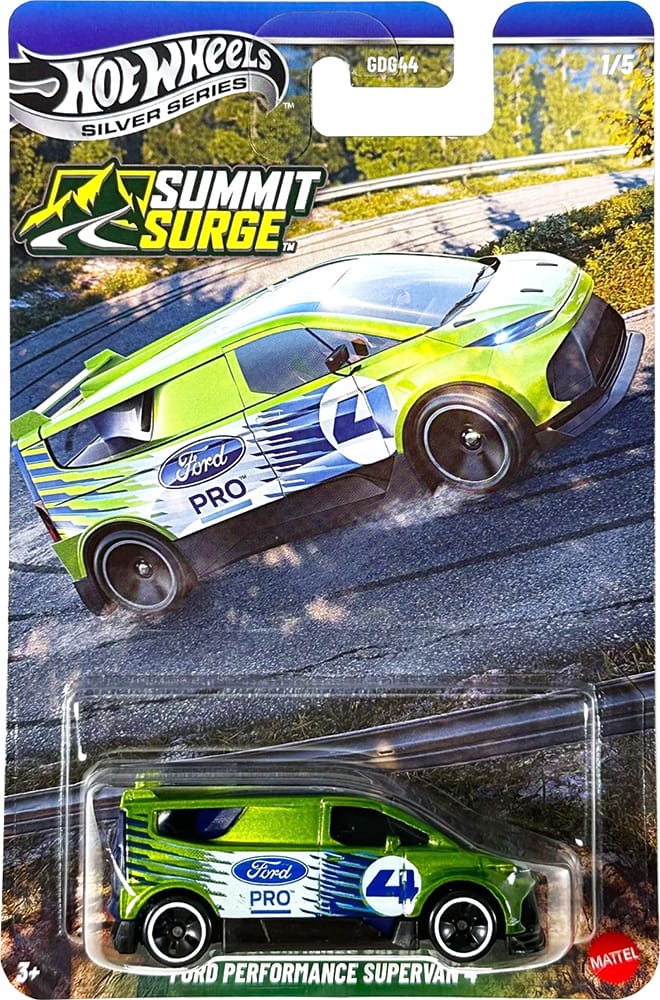
1/5: Ford Performance Supervan 4

The first car in the set is a modern electric marvel. The Ford Performance Supervan 4 (specifically the 4.2 iteration seen here) is a 1,972-horsepower beast that debuted in the real world to conquer the Pikes Peak International Hill Climb. It features four electric motors and can hit 60 mph in less than two seconds.

In terms of the Hot Wheels casting, this version comes in a striking green with “Ford Pro” livery. It’s a relatively new casting, having debuted in 2024, and it perfectly fits the “Summit” theme. While it’s a van, its performance specs put most supercars to shame. I don’t expect this one to skyrocket in value, but it is a must-have for Ford enthusiasts.

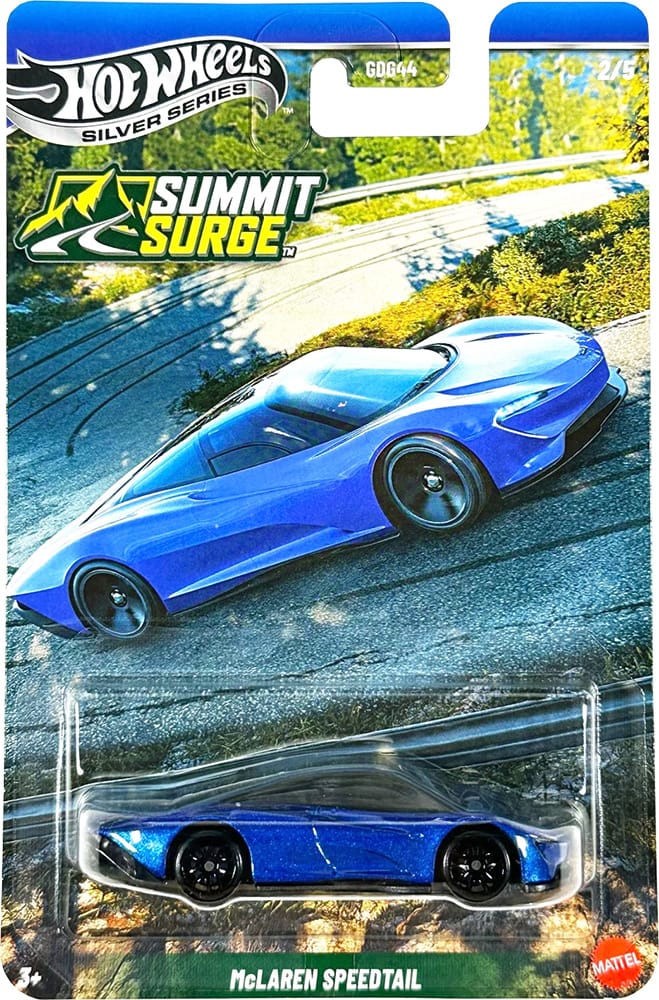
2/5: McLaren Speedtail

The McLaren Speedtail is what the brand calls a “Hyper GT.” For those of us who grew up in the 90s, this is the spiritual successor to the legendary McLaren F1. Just like the original, the Speedtail features a central driving position, though that’s hard to see through the tinted plastic of a 1:64 scale car!

The real-life version is limited to just 106 units and can reach a top speed of 250 mph. This Hot Wheels version, originally designed by the late, great Ryu Asada, looks exceptionally sleek in this blue finish. It’s a “slippery” car designed for maximum aerodynamic efficiency, making it a favorite for collectors who love modern exotics.

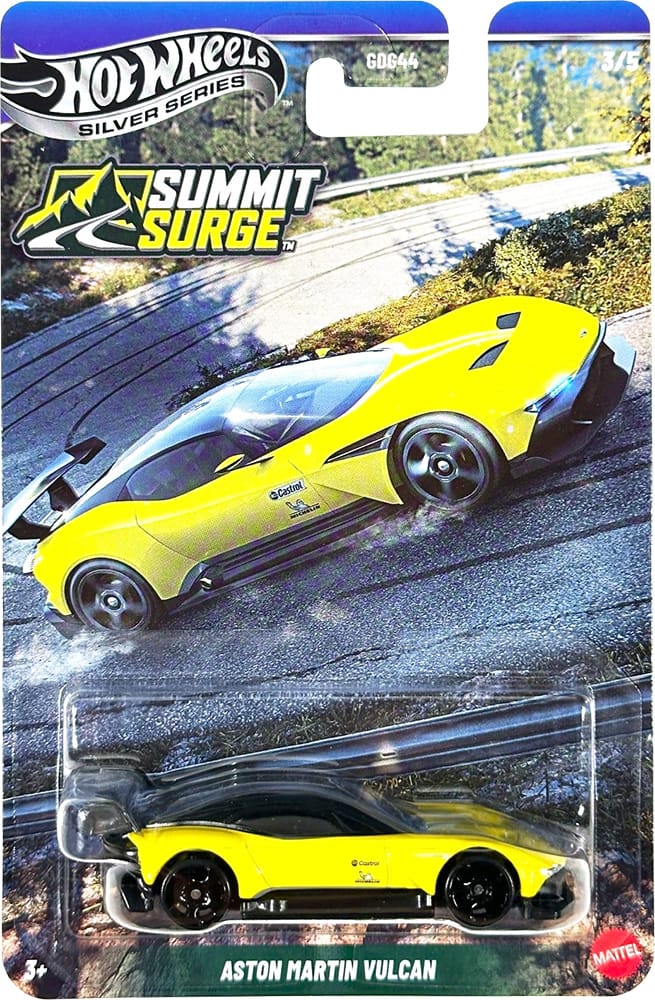
3/5: Aston Martin Vulcan

Next up is the Aston Martin Vulcan, a track-only V12 monster. When Aston Martin built these in 2015, they only made 24—one for every hour of the 24 Hours of Le Mans. With 820 horsepower and a $2.3 million price tag, it’s a car most of us will only ever drive in a video game or push across a desk.

The Hot Wheels casting has been around since 2019, and while we’ve seen several colorways, this yellow version with Castrol and Michelin logos feels right at home in a racing-themed set. It’s a “loud” car, both in person and on the card art, and should hold its own as a solid $4 pick-up.

4/5: Jaguar MK1

The Jaguar MK1 brings some vintage British class to the mountain road. Produced from 1955 to 1959, the MK1 was the car that established Jaguar’s “Grace, Space, and Pace” slogan. Interestingly, it was a favorite of both the British police and the bank robbers they chased, because it was simply faster than most other sedans of the era.

This matte black version features “55” racing numbers and a Castrol logo, paying homage to the race-spec versions frequently seen in historic racing events like Goodwood. It’s a newer casting that first appeared in the 2024 Race Day series, and it provides a nice historical contrast to the high-tech hypercars in the rest of the set.

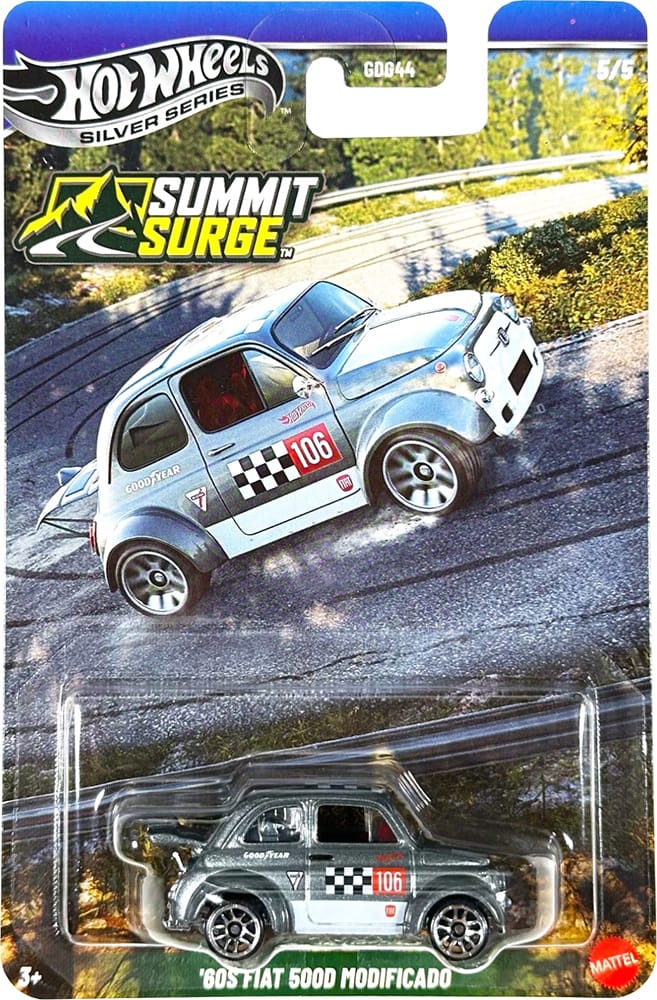
5/5: ’60s Fiat 500D Modificado

Finally, we have the ’60s Fiat 500D Modificado. This is arguably the most charming car in the bunch. Despite being named the “500D,” the casting is actually based on the 1965–1972 500F (the “D” model had suicide doors, which this casting lacks). The “Modificado” part refers to its racing modifications: a lowered stance, wide fenders, and that iconic propped-open rear engine cover used for cooling.

The Metalflake Gray paint and “106” racing livery give it a serious look for such a tiny car. It represents the era of European “pocket rockets” that thrived on tight, winding mountain roads where agility mattered more than raw horsepower.


Final Thoughts and Market Outlook

At $4 a pop, the Summit Surge set is an affordable way to add some variety to your display. I don’t anticipate any of these hitting the $15–$20 range anytime soon; they are more likely to settle into the $5 to $6 range on the secondary market once they leave the pegs. The real value here is for the “set completer”—the collector who realizes three years from now that they are missing the MK1 or the Supervan to finish their 2026 Silver Label run.

In my 28 years of tracking these, I’ve noticed that these “mid-tier” sets often become harder to find in mint condition later on because they aren’t hoarded as heavily as the Premiums. My advice? Grab the ones you like now, and if you’re a completionist, don’t wait too long to snag the whole set.


2026 Hot Wheels Gold Label Vintage Racing Preview: Godzilla Goes Gold   Recently updated !

The 2026 Hot Wheels Gold Label Vintage Racing series is officially on the horizon, and it’s already sparking some heated debates among the local collector community. While we wait for these to hit the pegs, you might want to check out some current Hot Wheels Vintage Racing listings on eBay to see how the previous releases are holding up. This new Mix T for 2026 is a premium “Gold Label” Car Culture set, which means we get the metal-on-metal construction and Real Riders that distinguish it from the more common Silver Series. I recently revamped our Hallsguide price guides specifically to highlight Car Culture and Gold Label releases, as these will be a primary focus for our site moving forward.

Skyline Nostalgia and the Gold Chase

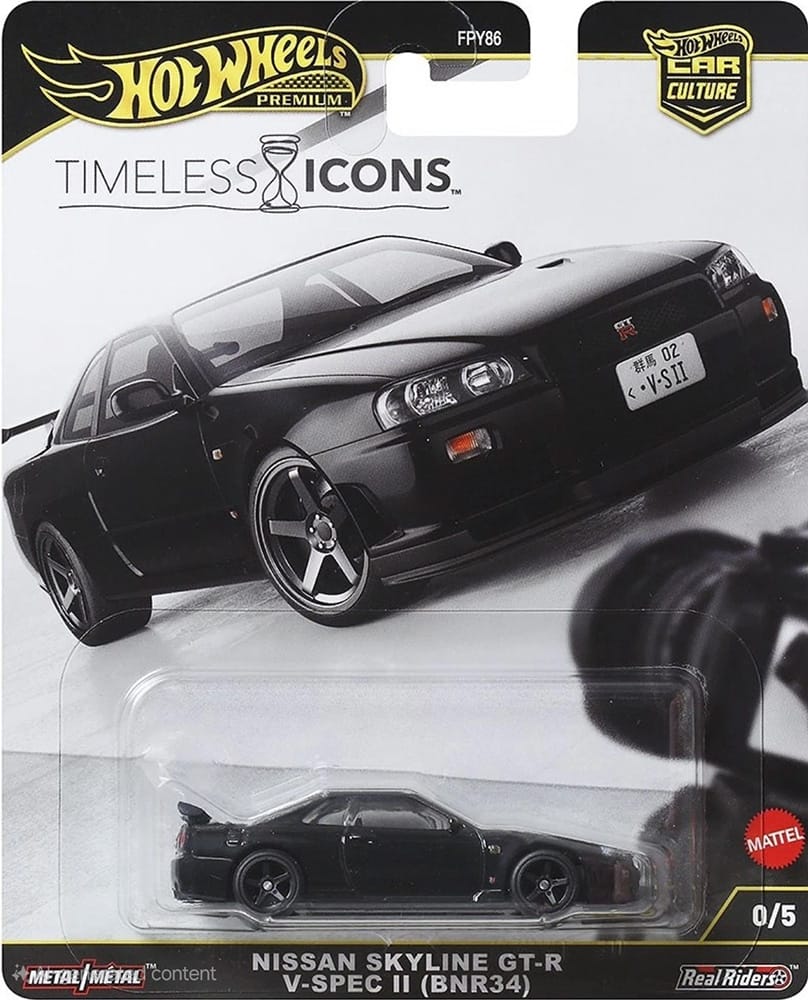
The absolute crown jewel of this 2026 assortment is the Nissan Skyline GT-R (BNR32). For those of us born in the late 70s who came of age during the 90s, this car holds a special place in our hearts. I spent countless hours in 1998—the same year I started Hallsguide—glued to a PlayStation playing the original Gran Turismo. The R32 was the car that changed everything for me. It wasn’t just a vehicle; it was a digital legend.

This specific release is even more significant because it serves as the 0/5 Chase car for the set. Mattel is leaning into the “Gold Label” branding by giving the Chase a stunning gold finish rather than the usual black-out treatment. If you manage to find one of these in the wild, expect the secondary market value to be astronomical. Even the standard versions of the R32 tend to command a premium, so a gold-themed Chase version will likely be the “Holy Grail” for JDM collectors this year.

Italian Elegance: The Ferrari 250 GTO

While the Skyline steals the spotlight, the Ferrari 250 GTO is an absolute stunner that deserves your attention. The Ferrari license returning to Hot Wheels has been the best news we’ve had in years, and this casting is a testament to why. The lines on this 250 GTO are incredibly crisp. It captures that 1960s racing spirit that makes Ferraris from this era so timeless.

Historically, the 250 GTO is one of the most expensive cars in the world, often selling for tens of millions at auction. While our 1:64 scale version won’t cost you a second mortgage, I suspect the resale value will climb steadily once the initial retail wave subsides. It is simply too pretty of a casting to sit on shelves for long. I’ve always admired the Ferrari aesthetic, even if my childhood bedroom was more likely to have a poster of a Countach or a Testarossa.

The Iconic Gulf Porsche 917K

You really cannot have a “Vintage Racing” set without the Porsche 917K, especially when it wears the legendary Gulf livery. The light blue and orange color scheme is perhaps the most recognizable in all of motorsports. This car dominated Le Mans in the early 70s, and its inclusion here adds a lot of historical weight to the mix.

I have vivid memories of seeing the 917K in racing documentaries as a kid, and it always looked like something from a sci-fi movie compared to the boxy sedans on the road in the 80s. The Gulf livery usually triggers a “buy on sight” reflex for most collectors. Because of this, don’t be surprised if the Porsche is the first non-chase car to disappear from the pegs.

Rounding Out the Set: Jaguar, Corvette, and Lancia

The rest of the 2026 Gold Label Vintage Racing series includes some interesting, if slightly less “hyped,” choices:

  • Jaguar XJS: A brand-new casting for 2026. This V12 beast was the height of British luxury and racing grit in the 80s.

  • ’76 Greenwood Corvette: This is a wide-body monster that looks like it’s screaming for a disco soundtrack. It’s a polarizing casting, but the “batmobile” style fenders are undeniably cool.

  • Lancia Stratos: A rally legend that always looks great in a racing set.

I’ll be honest—beyond the Skyline and the Ferrari, some of these might feel like “filler” to the average collector. However, for the completist, the set offers a great variety of racing history. We haven’t added specific prices to our 2026 Gold Label Price Guide just yet since these haven’t hit the secondary market, but stay tuned for updates as the first few sales start trickling in on eBay and Facebook groups.

Gold Label vs. Silver Series Confusion

It is worth noting that Mattel is also releasing a “Silver Series” under a similar name. Don’t get them confused! The Silver Series cars are great for the price, but they lack the Real Riders (rubber tires) and the full metal chassis of this Gold Label set. If you are looking for long-term investment value, the Gold Label Car Culture series is where you want to put your money.

The 2026 Vintage Racing set manages to bridge the gap between “Gran Turismo” generation JDM fans and classic European racing enthusiasts. Whether you are hunting for that elusive gold Skyline or just want a beautiful Porsche for your desk, this set has something to offer. Just be prepared to fight the “scalpers” at 7:00 AM if you want that Chase!

Hallsguide.com Nominated for the Model Car Hall of Fame

More Than Just Metal and Plastic

I often say that collecting is about more than just the metal and plastic on our shelves. It’s about the stories, the hunt, and the history behind every casting. That commitment to clarity is why I’ve dedicated so much time to building comprehensive price guides, ensuring you have the reliable data needed to understand the true value of your collection and navigate the market with confidence. Whether it’s tracking down a rare Greenlight chase or cataloging the rise and fall of market values, my goal has always been to make sure our hobby’s history isn’t lost.

A Major Milestone: The Nomination

That is why I am incredibly humbled to announce that I have been nominated for the Model Car Hall of Fame in the Model Car Historian category.

To even be considered for the same Hall of Fame that includes legends like Jay Leno, Carroll Shelby, and Hot Wheels icon Larry Wood is surreal. It is a validation of every late night spent updating the price guide, every article written, and every conversation I’ve had with you, the readers.

The “Oscars” of the Diecast World

If you aren’t familiar with the Model Car Hall of Fame (MCHOF), think of it as the “Oscars” of the diecast world. Since 2009, they have been the premier organization honoring the pioneers, designers, and entrepreneurs who have shaped our industry.

The MCHOF is truly global. In fact, the “Class of 2025” inductees will be revealed at the prestigious Spielwarenmesse (Toy Fair) in Nuremberg, Germany in January. It is the biggest stage in the toy world, and it is an honor just to have my name in the hat.

From a Dorm Room to a Global Community

Hallsguide has deep roots. I actually launched the very first version of the site from my college dorm room back in 1998. In my professional life off the screen, I have been a teacher and coach for 24 years, and I’ve always viewed this site through that same lens. Hallsguide is my way of giving back to the diecast collecting hobby and connecting with fellow auto fans everywhere.

I view the “Historian” category as a responsibility. It’s about ensuring that when a new collector enters the hobby five or ten years from now, they have the resources to understand where we came from. It’s about treating these miniature works of art with the respect they deserve.

How to Cast Your Model Car Hall of Fame Vote

This is where I need your help. The induction process is community-driven, and your voice matters.

  1. Click here: https://www.modelcarhall.com/vote/

  2. Scroll down to the Model Car Historian category.

  3. Select Trenton Hall / Hallsguide.

  4. Submit your vote!
Thank You for Your Support

It is a true privilege to be recognized by an organization that does so much to elevate and preserve the legacy of our industry. Regardless of the outcome, this nomination belongs to the entire Hallsguide community. Thank you for reading, for collecting, and for your support over the last two decades. Let’s see if we can bring this award home to the Hallsguide community!


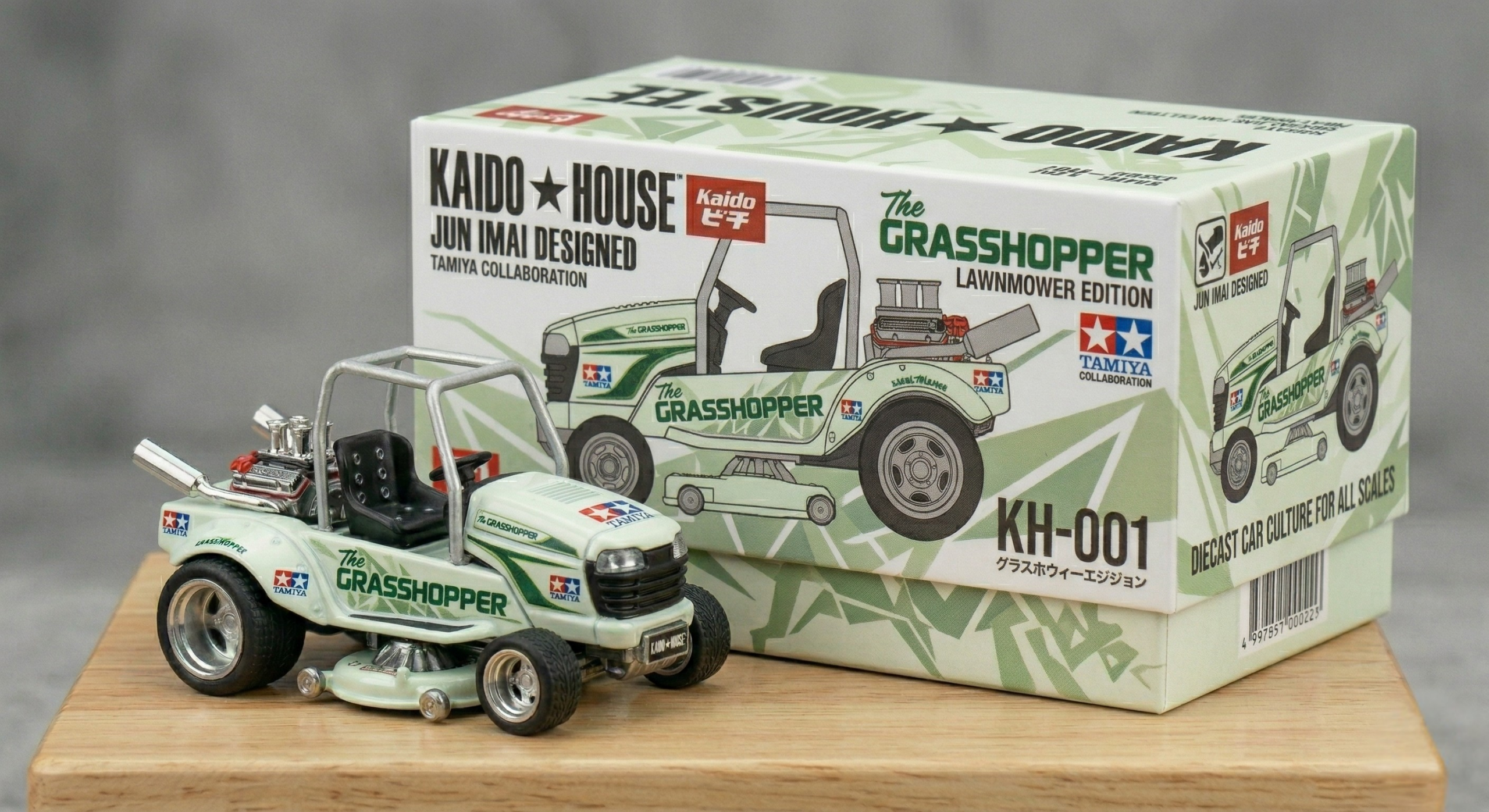
Why Kaido House is the “Next Big Thing” in Diecast (And Why You Should Be Collecting It)

If you’ve been in the diecast game as long as I have, you start to recognize the difference between a passing fad and a permanent shift in the market.

Back when I was running my retail shop, I noticed a trend that started as a trickle and turned into a flood. Collectors—many of whom were die-hard Hot Wheels purists—were starting to ask about a new brand. They were tired of fighting bots for RLC drops or paying premium prices for cars with quality control issues.

They were looking for something better. They found Kaido House.

Today, Kaido House is arguably the most exciting thing happening in 1:64 scale. Because of that skyrocketing interest, I’ve officially added a dedicated Kaido House Price Guide to Hall’s Guide.

Here is why this brand is the future of our hobby—and why you need to pay attention to the values right now.

The “Jun Imai” Pedigree

To understand Kaido House, you have to understand the man behind it: Jun Imai.

If that name sounds familiar, it should. Jun is a legend in the Hot Wheels world. He is the designer responsible for the resurgence of JDM in the mainline. He gave us the ’83 Chevy Silverado. He gave us the Datsun 510 Bluebird. He essentially defined the modern era of car culture at Mattel.

When he left to partner with Mini GT and start Kaido House, he didn’t just make another toy car. He took the shackles off. These cars represent his unfiltered vision—classic Japanese tuning culture mixed with modern precision.

From “One Casting” to a Global Phenomenon

When Kaido House launched, it was a risky bet. They started with just a single silhouette: the Datsun 510 Pro Street.

Early critics wondered if a brand could survive on just one car model, even if the colors changed. But Jun Imai had a roadmap.

  • The Origins: It began with KHMG001, the OG Green Pro Street 510. It was simple, wide-bodied, and aggressive.

  • The Expansion: The lineup quickly evolved. We saw the introduction of the 510 Wagon (a fan favorite), followed by the legendary Nissan Fairlady Z, and eventually modern JDM icons like the Nissan Skyline GT-R (R34) and the Honda NSX.

  • Today: The catalog now includes everything from American muscle like the Chevy Silverado to quirky deep-cuts like the Honda Acty mini-truck.

This variety proves that Kaido House isn’t a “one-trick pony.” It is a full-fledged manufacturer that can go toe-to-toe with anyone in the industry.

The “RLC Fatigue” and the Kaido House Antidote

The biggest complaint I hear from collectors right now is “RLC Fatigue.” It is a real sentiment, and it is driving people away from the Red Line Club and straight into brands like Kaido House.

We all love the history of Hot Wheels, but the modern RLC experience has become a source of stress rather than joy. You wake up early, fight a crashing website, battle bots that buy inventory in milliseconds, and pay $35 (plus shipping and tax) for a single car.

And the worst part? After all that effort, the car often arrives with issues. Glue stains, crooked decals, or “limited” numbers that are now soaring into the 30,000+ range. The exclusivity is fading, but the price keeps climbing.

Kaido House has stepped in to be the antidote to that stress.

For roughly $20 to $25, you aren’t just getting a toy; you are getting a model that often embarrasses cars twice its price. The value proposition is undeniable when you look at the specs:

  • Engineering vs. Hype: While many RLC cars are still sealed-body castings, almost every Kaido House release features an opening hood with a multi-piece engine bay. You can see the individual carburetors on the KA24DE engines or the twin turbos on the RB26s.

  • True “Lens” Details: Instead of painted-on headlights and taillights, Kaido House uses separate translucent plastic pieces. It catches the light like a real car.

  • Zero “Drop” Anxiety: You don’t have to fight a bot to get one. You can simply pre-order them from your favorite hobby dealer. You get the car you want, stress-free.

  • Collector-Friendly Packaging: RLC cars often come on blister cards that you have to destroy to open. Kaido House comes in premium, re-sealable boxes. You can take the car out, enjoy it, and put it back without hurting its value.

In short, Kaido House respects your time and your money. You get a “super-premium” experience without the premium headache.

The Data: Why Base Models Are Skyrocketing

This is the most critical part for investors. In the current diecast market, most “Standard” releases (non-chase cars) tend to stay flat or drop in value. Kaido House is breaking that rule.

I recently audited the first 50 releases for the Hallsguide Price Guide, and the numbers are shocking. We are seeing standard, non-chase cars doubling or tripling in value simply because demand is outstripping supply.

Look at these “Standard” Value Increases:

  • KHMG001 Datsun 510 Pro Street (OG Green): Originally retailing for around $20, this car now commands **$40+** for the standard version.

  • KHMG012 Datsun 510 Wagon (Hanami V1 Pink): This is a standout. The standard pink wagon has jumped to an estimated $75.

  • KHMG020 Datsun 510 Wagon (Fire V1): One of the most aggressive liveries they’ve done, now trading around $100.

  • KHMG048 Nissan Skyline GT-R R34 (Purple): The R34 is the king of JDM. The standard purple version is already hitting $100 on the secondary market.

This is rare. Usually, you have to find a “Chase” car to make money. With Kaido House, even the base models are proving to be solid investments if you hold them long enough.

The Thrill of the Chase

Of course, we can’t ignore the “Chase” element. When you order a car, there is a random chance you will receive a variation—often a “Raw” Zamac version or a special wheel color.

Because the base models are so strong, the Chases are hitting incredible heights.

  • A KHMG012 Hanami Wagon Chase can sell for $250.

  • A KHMG049 R34 White Chase is pushing $300.

Datsun 510 Surf Wagon Chase with bronze wheel variation

This complexity is exactly why I built the price guide. You can’t just guess the value anymore. You need to know if the version you’re holding is a $25 car or a $300 grail.

Ready to Check Your Collection?

I’ve built out the database to cover the critical first 50 releases (KHMG001–KHMG050), and I will be updating it constantly. Whether you are looking to buy, sell, or trade, make sure you check the numbers first.

Click Here to Visit the New Kaido House Price Guide #1-50


The Wallet Takes a Hit: How Trump’s Tariffs Inflated Your Hot Wheels Habit

Well, fellow collectors and auto enthusiasts, today we’re diving into a topic that’s likely made more than a few of us wince at the checkout counter: the rising prices of our beloved diecast cars, particularly Hot Wheels, and the role those pesky tariffs from the Trump era seem to have played. If you’ve noticed your diecast budget stretching thinner, you’re not alone. It’s a good time to keep an eye out for deals, and you can often find a wide selection of Hot Wheels, from mainlines to premiums, on eBay if local store shelves are looking sparse or overpriced.

It’s no secret that prices for many goods have been on an upward trajectory, but the diecast aisle, a place many of us escape to for a hit of nostalgia or the thrill of the hunt, hasn’t been immune. The conversation around tariffs, specifically those imposed on Chinese goods during the Trump administration, has been a hot topic, and the ripple effects are still being felt on our tiny, wheeled treasures.

Hot Wheels Gold Series price increase

Hot Wheels Premiums (Gold Series) have increased from $6.47 to $7.74 at Wal-Mart

More Than Just Mainlines: A Broader Look at Price Hikes

As a collector who grew up in the ’80s and ’90s, I remember when Hot Wheels mainlines were comfortably under a dollar. Finding that perfect casting felt like a steal. Fast forward to recent times, and as of mid-2025, we’ve seen those mainline prices creep from around $0.94 to $1.18, and now commonly sit at $1.25 at many Walmarts and even $1.29 at retailers like Target. If you’re grabbing them at a local drug store or supermarket, don’t be surprised to see prices ranging from $1.39 to over $2.00!

But the financial squeeze isn’t limited to single basic cars. The more substantial ouch-factor for many collectors has been in the premium lines. Those beautiful Hot Wheels Car Culture, Boulevard, and Retro Entertainment series, with their metal bases, Real Riders, and detailed tampos, have seen a significant jump. For instance, at many Walmart stores, these premiums have climbed from a more palatable $6.49 to a rather steep $7.74. I can personally attest to the slight hesitation I now feel before grabbing a full set.

The popular Team Transports haven’t escaped either. Once hovering around the $12.99 to $14.99 mark, they are now frequently priced at $17.99 or even $18 at major retailers. I did see some collector chatter about select Walmart stores having a “rollback” to $13.97 on certain Transports, likely to move older or less popular stock, but the general trend is undeniably upward. For context, a set of three Team Transports can now easily set you back close to $60 with tax.

Even multi-packs, often a go-to for getting a quick Hot Wheels fix or for kids’ collections, have seen increases. Hot Wheels 5-packs, a long-time staple, have gone from around $5 to $5.29 to now being regularly found at $5.69 at Target and a similar price on Amazon (sometimes listed higher but discounted). Monster Trucks singles (1:64 scale) are now typically $3.89 at Target, with their Demolition Doubles 2-packs hitting $7.49. If you’re eyeing a Monster Trucks 5-pack, that could be around $19.19. Even Color Reveal 2-packs are fetching about $7.99. Looking at larger sets, Amazon shows 10-packs around $13.99 and 20-packs in the $25 range. These aren’t massive leaps individually, but across the board, it’s clear the days of sub-$1 mainlines and $5 premiums are long gone.

Greenlight Hollywood Series

Greenlight Hollywood Series almost doubled in price overnight to $9.96.

So, what’s the connection to the tariffs? Well, reports from early to mid-2025 confirmed that major toy manufacturers, including Mattel (the parent company of Hot Wheels), explicitly stated they would be raising prices to offset the costs incurred from tariffs imposed on goods manufactured in China. Given that a colossal 80% of toys sold in the U.S. are made in China, the toy industry was squarely in the crosshairs. Companies like Lionel, known for their NASCAR diecast, also announced tariff-related surcharges. Some of these tariffs were alarmingly high, with figures like 145% being cited in news reports, although there were periods of temporary reductions.

Collector Chatter and Economic Reality

The sentiment among collectors on forums and social media has been a mix of frustration and resignation. Many savvy enthusiasts quickly pointed out that these import duties, while politically framed in various ways, ultimately translate into a tax paid by U.S. consumers. The diecast companies weren’t just going to absorb these massive new costs; they were inevitably going to pass them along to us, the end buyers. There was widespread speculation, which seems to have panned out, that prices could rise by 25-35% or even more on certain items.

From my perspective, as someone who believes in the principles of free markets and free trade, these tariffs felt like an unnecessary burden on consumers. While the stated goals might have been to bolster domestic manufacturing or address trade imbalances, the immediate and tangible effect for hobbyists was simply paying more for the same products. It’s a classic case of economic cause and effect – raise the cost of importing, and the price on the shelf will follow.

I remember the late 90s when I started Hallsguide as a price guide. The market was different, influenced more by scarcity and collector demand than by overarching trade policies. A Treasure Hunt was valuable because it was hard to find, not because import taxes made all cars pricier. It’s also worth noting that even Mattel’s direct-to-consumer Red Line Club (RLC) exclusives have seen price increases, which, while sometimes attributed by collectors to simple inflation or “money grabs,” also happen in the larger context of rising production, material, and shipping costs – all of which can be exacerbated by tariffs impacting the supply chain.

Beyond the Pegs: The Broader Impact

Mattel and other toy giants did announce plans to diversify their manufacturing bases, moving some production out of China to other countries to mitigate the tariff impact. However, such shifts take time and investment, and in the interim, price adjustments were deemed necessary. Even with these moves, Mattel executives noted that a significant portion of their production remained in China.

The conversation also touches on the secondary market. Will higher retail prices for new diecast drive up the value of older, pre-tariff era cars? It’s possible. If acquiring new models becomes significantly more expensive, collectors might turn their attention and budgets to filling gaps in their collections with older pieces, potentially increasing demand and prices for those. However, it could also have a chilling effect, with collectors buying less overall due to budget constraints.

Hot Wheels Neon Speeders (Silver Series) has increased to $3.97 at Wal-Mart.

One has to wonder if the slightly higher price point on mainlines, for example, might make some of the less “hot” castings linger on the pegs longer, potentially leading to retailers being more cautious with orders. For premium lines, the jump to nearly $8 a car, and Team Transports pushing towards $20, could make casual buyers think twice, reserving purchases for only their absolute favorite models.

Looking Ahead: Are We Stuck in High Gear on Prices?

While the specific “Trump tariffs” were a distinct policy phase, their impact has helped set a new baseline for pricing in many industries, including ours. Companies have adjusted their cost structures, and it’s often harder for prices to come down than it is for them to go up.

As collectors, we adapt. We become more selective, we hunt harder for deals, and maybe we trade a bit more. But it’s hard not to feel a twinge of disappointment when a simple pleasure like picking up a few Hot Wheels starts to feel noticeably more expensive due to policies enacted far away from the toy aisle.

I’ll keep my eyes on the trends and report back on what I see. For now, happy hunting, and may your diecast finds still bring you joy, even if they cost a few more cents (or dollars) than they used to.